Monday, November 19, 2012

Tuesday, November 13, 2012

Monday, November 12, 2012
About Unsigned.com
Unsigned.com is a website that unsigned artists can register an account which allows them to upload their tracks allowing them to get exposure. Unsigned.com is owned by First Beat Media Inc who are an online company "committed to being the best source of information to discover unsigned artists."
There are thousands of unsigned artists registered online, there are a wide range of genres for any vistor to choose from; as well as many songs waiting to be heard!
You can get to know the artist/ band a little more on their page as you can read about them, see photos which have been uploaded. You can also leave comments and become a 'fan' if desired - making the website very interactive.
Thursday, November 8, 2012
vox pop
 Vox pops is another technique we can use to get information about the desired target audience.
 The interviewees are shown to be in public places and are supposedly giving spontaneous answers, in a chance encounter, to the interviewer. Vox pops are used all the time in news programmes to show balanced views.
Each person is asked the same question(s) with the aim in mind to get as many (variety of) answers by the public on a certain subject. Therefore to get as much variety as you can, you need to ask a range of different people, age groups, gender, religion, race etc
step 6 music video process
droduction Insurance
With every video production, there's a risk for accidents, loses or other inconveniences that may ruin assets that are either irreplaceable or very expensive to replace. There are also other cases where dangerous stunts or handling of potentially dangerous elements are required during production. In these situations it is very important that the production company provides insurance to cover for these potential inconveniences. In some cases, when renting expensive motion picture equipment, it is a requirement from the company renting the equipment that this is covered by production insurance.
The cost of production insurance works in a similar way to any other insurance policy. It depends on the conditions in which the production will take place from the location to the stunts, weather conditions, cost of equipment, third party liability, and so on.
There are cases where productions are executed in a very controlled environment and where recreating assets in case of loss may not be as expensive. In such cases, it may be okay to not get a production insurance policy as it may end up being more affordable to cover the costs of redoing than to pay for a policy that after all, may not even be needed.
step 5: music video process
Editing and colouring
Editing is the most important step during the post-production workflow. Without editing, there wouldn't be any cuts and there wouldn't be any video. After all the footage has been loaded up into the system, the editor will layer out the sequences on a timeline and will carefully select which part of which sequences will be used to build the final music video.
This process takes a fair amount of time and it's directly proportional to the amount of footage shot during filming, known as principal photography stage.
Once all the shots have been laid out into the timeline, it's time to do some colour correction.
The process of colour correction brings a few benefits to the final cut. Some of these benefits are:
ensure colour found in the selected shots don't exceed the limits set by broadcasting standards;
if desired, increase the consistency of colour throughout the video;
also if desired, create specific looks for some or all the clips on the timeline (high contrast, burnt image, saturated colours, etc.).
ensure colour found in the selected shots don't exceed the limits set by broadcasting standards;
if desired, increase the consistency of colour throughout the video;
also if desired, create specific looks for some or all the clips on the timeline (high contrast, burnt image, saturated colours, etc.).
Once all the clips that need treatment have been corrected, it is now time to apply transitions and effects.
Transitions are used to join two clips together. Some of the most commonly used transitions are cross dissolve, dip to colour dissolve and fade-in and fade-out. Different transitions have different "meanings" in the language of filmmaking. For instance, cross dissolves can be used to cut between action in present time and a flashback scene. On the other hand, fades can be used to express that a longer period of time has passed between the situations depicted in the joint clips.
Once all the clips have been cut, colour corrected and smoothly joint together using cuts and transitions, it is time to master the timeline.
step 4 ; music video process
Broadcast quality digital video
Without getting into the technicalities of what broadcast-quality digital video means, it is more effective to concentrate on the practical applications of this format and what makes it compatible with broadcast standards.

When filming, or taping action using digital video, in most if not all cases, it is important to treat the captured footage to make it compatible with television broadcast standards. Technically speaking, there are certain limitations in the amount of color and luminosity that need to be respected. For instance, a very bright image or one with over-saturated color can fall outside the accepted scope, according to NTSC television broadcast standards. This is why it is important to do proper treatment to the footage through color correction to ensure the final product will be broadcast-friendly and therefore considered for broadcast by television stations.
step 3; music video process
Location Scouting
 When filming on-location, as opposed to filming in a controlled studio, there is a pre-production step that needs to be taken: location scouting. Typically done by directors in conjunction with directors of photography and sometimes lighting technicians, location scouting is the process of selecting a right location for the different scenes of the production.
Locations have a significant impact on the final product. They can be either exteriors or interiors, studios, houses, living rooms, offices, stores, warehouses, open fields, etc. Every set where the action is filmed, is a filming location.
Choosing the right locations is the responsibility of both the production company and the artists as the locations need to please the artists as well as serving the technical and creative requirements of the treatment as interpreted by the director.
step 2: music video process

Casting
Casting is the process of hiring actors to play the characters in a script, typically done by a casting director, but with some input from a director, producer, or studio. (Internet Movie Database).
Music videos based on the artist's performance usually don't require actors as the only subjects on-screen are the band members. There are however, situations where a basic performance video can be complemented with minor appearances from actors helping depict a storyline or simply relationships between people.
In more complex storytelling situations, it is important to cast actors that can play the roles in a way that is as representative as possible of those described in the treatment.
In this kind of situations where the success of the storytelling depends on the actual artistic performance of the characters, it is essential that the chosen actors can match the requirements of the role, either naturally or by training.
In summary, storytelling-based treatments will require the hiring of actors, preferably with on-screen experience and that are versatile enough to adapt to the requirements of the roles.
step 1 :music video process
Writing Music Video Treatments
At the beginning of every music video project, there is a need to work with the artist to define a desired treatment. A video treatment, also known as video concept, outlines information with regards to what the music video will be about. Conceptually, a music video could show the artist performing the song in front of a live audience or by itself; alternatively, a music video can also present a story line where certain situations and storytelling takes place. Furthermore, it can also be an experimental exercise where random images are shown to complement the music in a more abstract way. All of these angles constitute the treatment, or concept, of a music video.
However, a video treatment goes beyond this exercise of defining the overall direction of the video. The treatment goes down to describe the kind of locations, situations, stories, images, look and feel, tone and color, pacing and so on of the music video. Even though most treatment writers don't follow specific guidelines or structures, a well written treatment is one that can successfully communicate complete ideas to artists.
We have had the chance to write several music video treatments for several artists where different ideas and angles were presented for them to consider. Also, a video treatment can help with the process of creating the production budget where items identified in the treatment are included in the budgeting process.
Summarizing, a music video treatment is the starting point of every project. It allows the production company to communicate its ideas to the artists and it allows artists to make decisions regarding the direction of their video. The treatment also helps production companies to write production budgets that are accurate and that give artists a complete view of what to expect when embarking on the production of their music video.
Storyboards
Usually after a music video treatment is approved by either the artist or the record label, the next step is to create the storyboards. Storyboards are a great medium to help everyone involved in the production get a visual understanding of the treatment.
Storyboards allow the director to try different approaches to a scene. Storyboards also serve as a communication tool between the production company and the artist where either party can provide input or feedback in a more contextual way than if it was only based on a narrative treatment.
Another advantage of using storyboards during production is that they are a great time saving tool. Storyboards help keep the process of filming stay focused on pre-planned and pre-determined angles and takes.
Furtermore, everyone involved in the pre-production, production and post-production process can benefit from storyboards. From actors to camera operators from lighting technicians to producers, from editors to wardrobe, makeup and hair stylists. Having a visual reference of what is being filmed and how it will flow when cut helps everyone work towards a common, organized goal.
top of the pops
 Top of the Pops is a music chart TV show made by the BBC, it’s the longest-running pop music show in Britain. The format was simple and effective and remains surprisingly popular, many other shows have mimicked it’s format. It was first brought to the screens of the nation on New Year’s Day 1964 and was presented by Jimmy Savile. The show was all filmed live, shockingly all the acts were actually miming their songs! The first edition features amazing, popular acts like the Beatles, Dusty Springfield and The Rolling Stones. The 1970s were when the show’s viewing figures were at an all time high, with 15 million people tuning in. The show’s growing reliance on pre-recorded material that began in the late 80s lead to decreasing viewing numbers. The programme ran on TV until 2006 and then moved to the airwaves as a radio show, hosted by Tony Blackburn. The plummeting single sales, Youtube and Music Channels killed Top of the Pops because the public became familiar with ‘in demand’ and free music. The last ever episode aired on 30th July, which is a tragedy because I remember watching it as a kid. It’s how we heard about new music and it was exciting to see the ‘live acts’. Despite the end of the show, there is still a TOTPs magazine, full of information about the up and coming music and chart hits, along side juicy celebrity gossip and fashion & beauty advice. The target audience for the magazine is teenage girls.
music vidoes succes Criteria
- To help the artist’s and band’s tracks be heard globally, on a mass scale.
- To help promote the band, providing a visual representation of the band.
- To ensure people remember the song and video
- Music Videos are a platform for film makers – film makers associated with artist
- To invoke a reaction
- To provide the audience with an incentive to see the band live
- To lead to more sales and longevity of the artist
- They’re used for an extension of income, keeping the artist or band in the public eye, after the album release. Ideally racking up sales of their album.
- To link a song to a Film/TV series e.g Chris Cornell’s – ‘You know my name’ , which features on the Casino Royale Soundtrack has footage from the film. When people think of the film they’ll be reminded of the song as well.
- entertainment purposes.
The Beatles spent 2 days filming one of the first ever real music videos, in 1976, for their song ‘Strawberry Fields’. The video was a huge hit and it lead to more bands and artists desperately wanting their own music video.For the video, they borrowed techniques from underground and avant garde films. Reversed film, slow motion, dramatic lighting and unusual camera angles can all be seen in the video.
 The popularity of music videos really started to increase in the 80s, MTV ( (a tv channel that broadcasts popular and promotional videos) launched in 1981. The first music video played on it was ‘Video killed the radio star’ by The Buggles. Having a music video meant you had a means to ensure your music was heard of all over the world. The majority of videos produced were for British acts, which is why in the 80s, there was an increasing number of British acts in the American Charts. Which is a perfect example of the importance and impact of music videos
Ofcom are responsible for making sure no harmful or offensive music videos are broadcast before the watershed, to protect under eighteens from material that is unsuitable for them. They also ensure no explicit language is broadcast before the watershed.
album analyse
 the dark side of the moon is a concept album by the Pink Floyd. it was released on 17th march 1973 in the US and 24th march 1973 in the UK. the dark side of the moon bulit on the ideas that Pink Floyd explored in their lives shows and recordings, but it lacks the extended instrumental excursions which had characterised thier work following the departure of founding member, principal composer and lyricist, syd Barrett, greed, aging, and mental illness, the latter partly inspired by barrett's deteriorating mental state
this album cover is different but striking. the light prism is a well known symbol in science, suggesting a confidence that Pink Floyd are well known and intelligent. the rainbow against the black bacground stands out and draws attention. the represents the fact that pink floyd have an important message. the lack if a title is unusal, as at first glance you cannot see whose album it is. however, this could be a good thing, as it forces a potential audience to look at the album further to find out who has made it. this could either genrate more intrest, or annoy and disappoint the buyer. either way, the cover still ensures that the album is looked at
album analyse abbey road
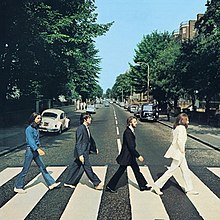 abbey road is the eleventh offical U.K album and seventeenth U.S album released by the beatles.through work on abby road began in april 1969, making it the final album recorded by the band
the idea of this image is that paul Mccartney is dead, which is also suggested in a song called paul is dead, and hidden lyrics in various other songs
John Lennon is dressed all in white, like a clergyman. ringo star wears a black suit, like an under taker, paul wears a black suit without shoes, and walsk out of step with the other Beatles. it is traditional for people to be buried barefoot, and paul is pictured barefoot, suggesting that he is dead or a ghost. there is a hearse in the back ground and it looks like that is where they
Tuesday, November 6, 2012
asking for promission

Monday, November 5, 2012
Artist's Target Audience
Looking more into our chosen artist's music and profile it's clear that the primary target audience is girls and boys aged around 16-24, like myself, and possibly younger teenageers. Another audience the artist attracts are people that like hiphop and R&B, so possibly people who like to listen to other artists such as wiz khalifa
The target audience is also another factor we need to include whilst brainstorming for ideas, as well as to promote the track and the artist successfully.
The target audience is also another factor we need to include whilst brainstorming for ideas, as well as to promote the track and the artist successfully.
preliminary task
The preliminary task was a good introduction to what producing a music video would be like. It wasn't that hard to learn the lyrics because there was only about a minute's worth to learn, when it comes to shooting our music video that will be much different as there is about 2/3 minutes worth to learn, as well as it's just one person learning all these lines.
Filming the preliminary all in one day I think was useful as you get everything you need there and then, also helps just to get it out of the way and know you have all that footage. So when it comes to shooting my coursework I think it would be effective to shoot everything in one-two days.
The editing process, even for a very small project like this, seemed long and tedious I think I didn't actually grasp how long this process will take- and we just roughly edited! For the coursework if we get all the filming out of the way quickly then we can spend much more time editing which could prove very useful.
Filming the preliminary all in one day I think was useful as you get everything you need there and then, also helps just to get it out of the way and know you have all that footage. So when it comes to shooting my coursework I think it would be effective to shoot everything in one-two days.
The editing process, even for a very small project like this, seemed long and tedious I think I didn't actually grasp how long this process will take- and we just roughly edited! For the coursework if we get all the filming out of the way quickly then we can spend much more time editing which could prove very useful.
Subscribe to:
Posts (Atom)